
When mentioning Korea, many people often think of modern cities, sparkling lights and the excitement of urban life. However, to fully explore the culture of this country, tourists traveling to Korea should not miss the opportunity to experience one of the famous destinations – Gyeongju. Let’s find out with us what is interesting about Gyeongju city and whether it is worthy of being a stop for tourists’ next trip!
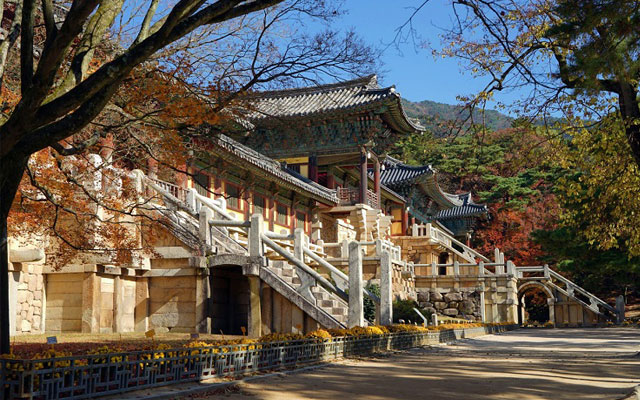
Explore Gyeongju City – The place that preserves the essence of Korea’s Silla Dynasty
About Gyeongju City
Located in northern Gyeongsang, Gyeongju boasts an open-air museum filled with history and culture. Known as the capital of the Silla Dynasty, the land is located near the southeastern coast of the Korean Peninsula.
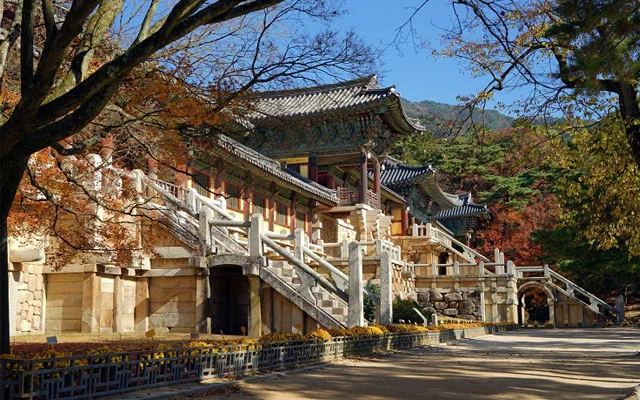
Gyeongju is a place that retains traces of its golden age, where the Silla Dynasty left a strong mark. Bulguksa Temple, an architectural masterpiece, and Seokguram Pagoda with its precious stone Buddha statue, are both architectural and spiritual symbols of the ancient capital of Gyeongju.
Gyeongju is not only famous for its historical sites, but also for its narrow streets, traditional villages and brilliant cherry blossom gardens. Places like Bulguksa, Yangdong Village and the Royal Tombs of the Silla Dynasty are vivid pictures of life and art from the past.
When is the best time to travel to Gyeongju?
Gyeongju is located near the sea, so the climate is cool and temperate. Summers are usually quite hot and humid, while winters are cool. The peak tourist season here usually falls in April and May, when travel costs will increase, so visitors should pay attention to booking hotel rooms and plane tickets early.
In addition, tourists on a tour of Korea can also visit Gyeongju in December to enjoy the cool air typical of winter.
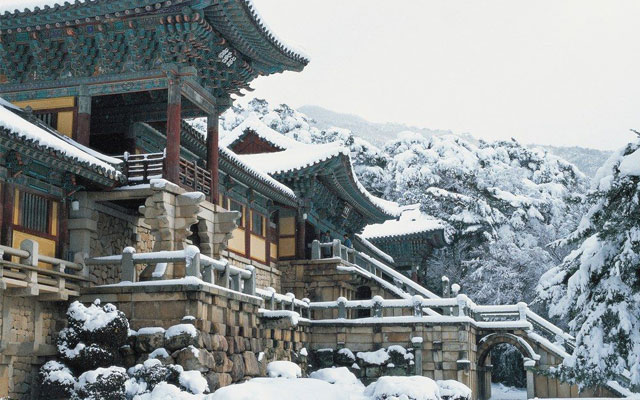
When is the best time to travel to Gyeongju?
Famous Gyeongju Tourist Destinations
Bulguksa Temple and Seokguram Grotto
The Bulguksa Temple complex, which includes Bulguksa Temple and Seokguram Grotto, has been designated a UNESCO World Heritage Site as “a masterpiece of Buddhist art in the Far East.” Seokguram Grotto is a 9th-century national treasure, notable for its colossal Buddha statue overlooking the sea. The statue has its left hand in the dhyana mudra (concentration) position and its right hand in the bhumisparsha mudra (touching the ground) position.
The seated Buddha statue is guarded by 12 royal guards. According to Gyeongju city travel experience , if visitors visit on the summer solstice, they can admire the Buddha’s third eye illuminated by the sunlight shining through the dome above the statue’s head. Note that visitors are not allowed to take pictures inside the cave due to the sacred nature of the place.
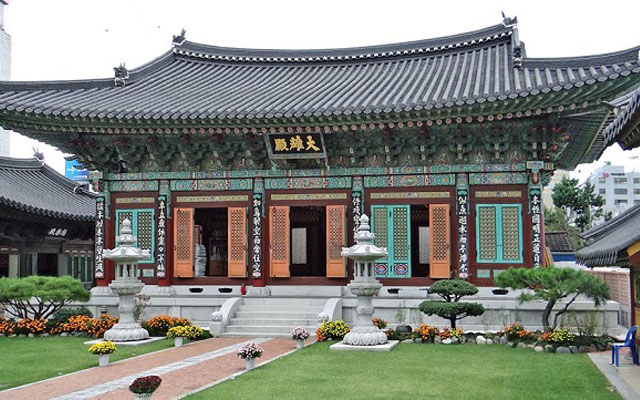
Bulguksa Temple
Donggung Palace and Wolji Pond
Donggung Palace is all that remains of the Silla Kingdom’s massive palace complex after it burned down in 935. Considered a secondary palace after the main palace, it was once used by the crown prince.
After archaeological excavations in the early 20th century, the palace was rediscovered with a total of 26 buildings, but only 3 buildings were rebuilt. There is a beautiful pond and some important relics. The lake is especially beautiful at night, so if you have the opportunity to go on a tour of Korea , please visit here.
Wolseong Yangdong Village
Yangdong Village has a history dating back to the 14th-15th centuries and is one of the UNESCO World Heritage Sites in Gyeongju. Inside the village, there are about 150 houses with unique architecture, clearly divided between nobles and commoners. This is an attractive place for those who love to learn about Korean culture.
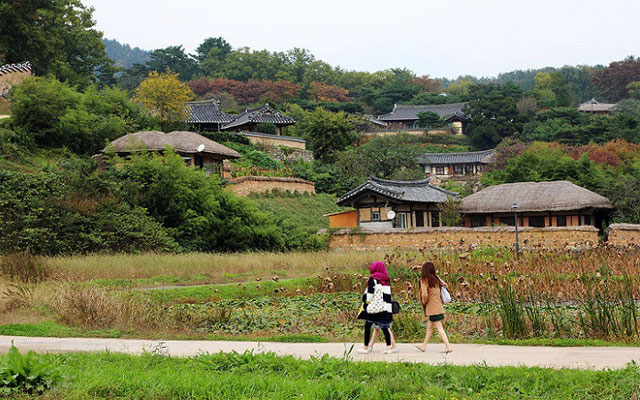
Wolseong Yangdong Village
Seokguram Grotto
Seokguram Grotto, also known as Seokguram Tower, located on the top of Tohamsan Mountain in Gyeongju, is one of the largest spiritual structures in Korea. Built in the 8th century, Seokguram is an important relic of the Silla Dynasty.
Seokguram’s distinctive architecture uses stone and brick to create a solid and solemn structure. The focal point of Seokguram is the statue of Guanyin Bodhisattva carved from a single block of stone, located in the middle of a sacred and quiet space. Coming here, visitors will feel the peace and sacredness. This place also helps to relax the soul and enjoy the tranquility of the ancient capital of Gyeongju.